
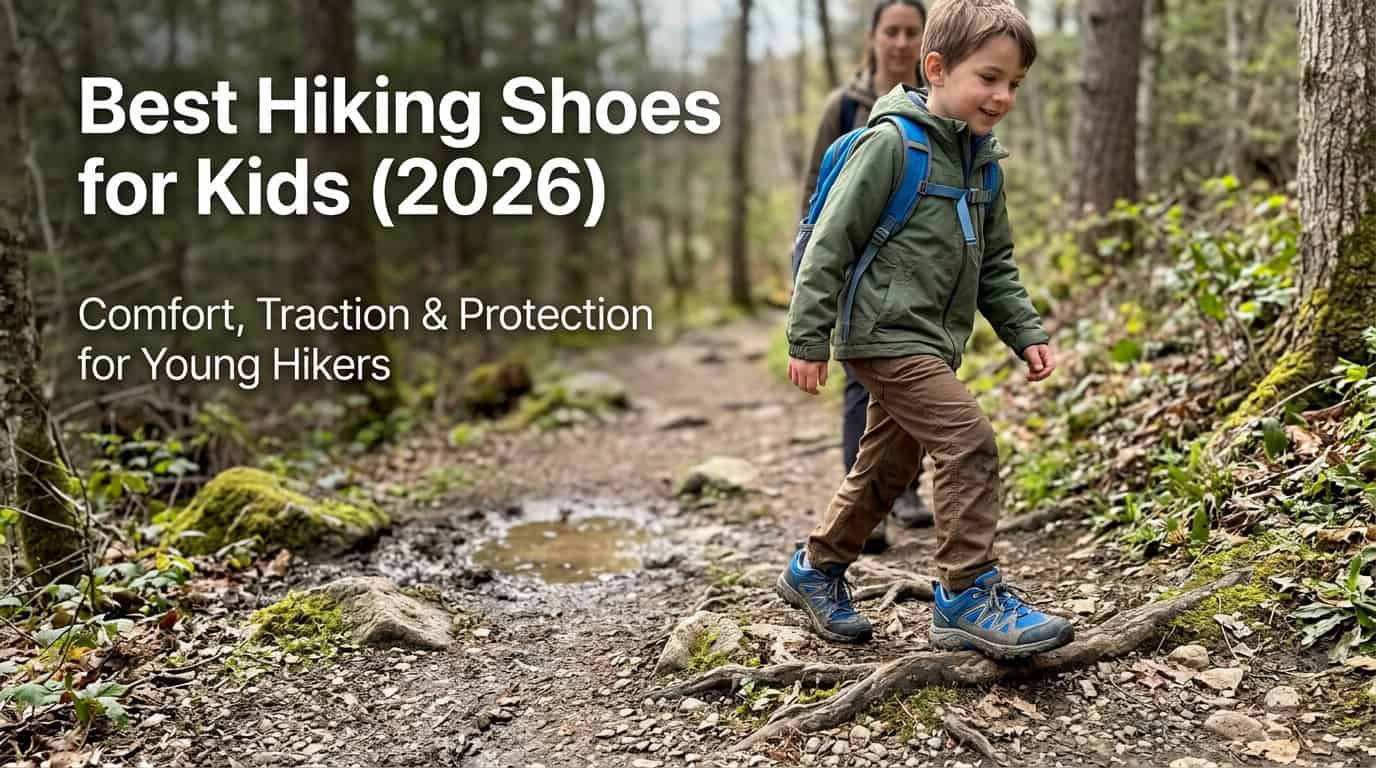
Bottom line upfront: The KEEN Kids Targhee 4 Low is the best starting point for most families — wide toe box, reliable waterproofing, and the comfort that keeps kids moving forward on the trail instead of sitting on a rock complaining about their feet. For serious trail families who want the best grip money can buy for a young hiker, the Salomon Speedcross J is the performance pick. And if budget is the primary constraint, the R CORD Kids Hiking Boots deliver genuine waterproofing at a price that makes sense for feet that will grow out of them by next summer.
The Real Reason Kids’ Hiking Shoes Matter
Three things cause more trail meltdowns than anything else combined: blisters from shoes that rub, sore feet from inadequate cushioning on rocky ground, and slipping on wet rocks or loose gravel because the outsole has no real grip. None of those problems have anything to do with distance or elevation. They happen on a two-mile nature walk in rubber-soled sneakers just as easily as on a challenging mountain trail, and once they happen, the hike is over — mentally if not physically.
A properly fitted pair of hiking shoes with real traction and appropriate cushioning doesn’t guarantee a good hike. But poor footwear almost guarantees a difficult one, and the difference between a child who loves hiking and one who refuses to go again often comes down to whether their feet hurt the last time they tried.
Do Kids Actually Need Dedicated Hiking Shoes?
Do Kids Actually Need Dedicated Hiking Shoes
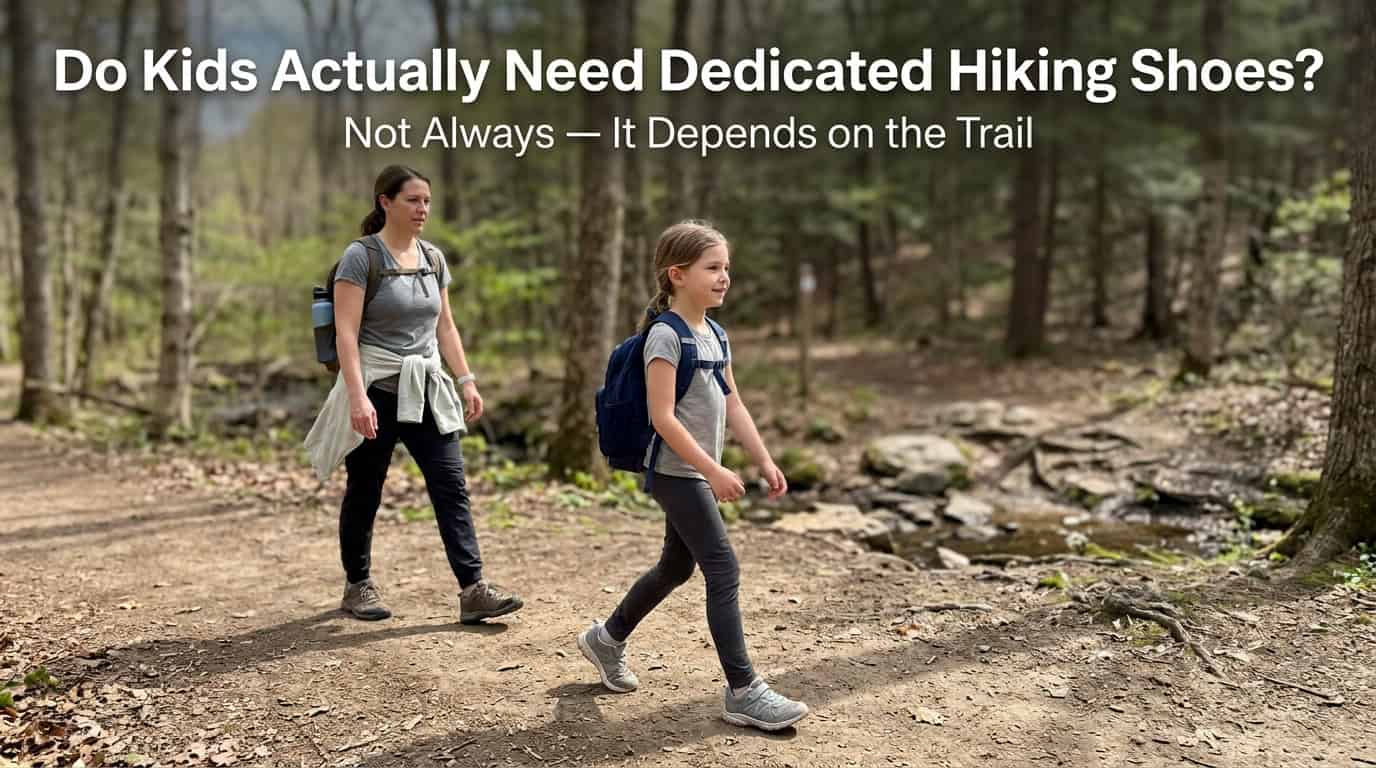
Honest answer: not always. For easy, flat nature trails on maintained paths, a well-fitting sneaker with decent tread will serve most kids adequately. The CleverHiker team — one of the most respected gear-testing organizations in outdoor hiking — makes this point clearly: the best hiking shoe for a child is often the one they already like to wear, because comfortable familiar footwear means one less thing to complain about on the trail.
Where dedicated hiking footwear genuinely earns its cost:
- Wet or muddy conditions: Waterproofing and drainage keep feet dry when sneakers get soaked and stay wet
- Rocky or rooted terrain: Rock plates and stiffer soles protect small feet from feeling every root and stone underfoot
- Loose gravel or steep descents: Lugged outsoles with real grip prevent the sliding that causes falls and fear
- Multi-hour hikes: Better cushioning systems protect young joints over distances that standard sneaker padding wasn’t built for
- Wide feet, flat arches, or orthopedic needs: Purpose-built hiking footwear offers fit options that standard sneakers rarely provide
If your family hikes regularly, on varied terrain, in all weather — dedicated hiking footwear pays for itself in confidence, comfort, and fewer early returns to the trailhead.
Getting the Fit Right: The Most Important Step
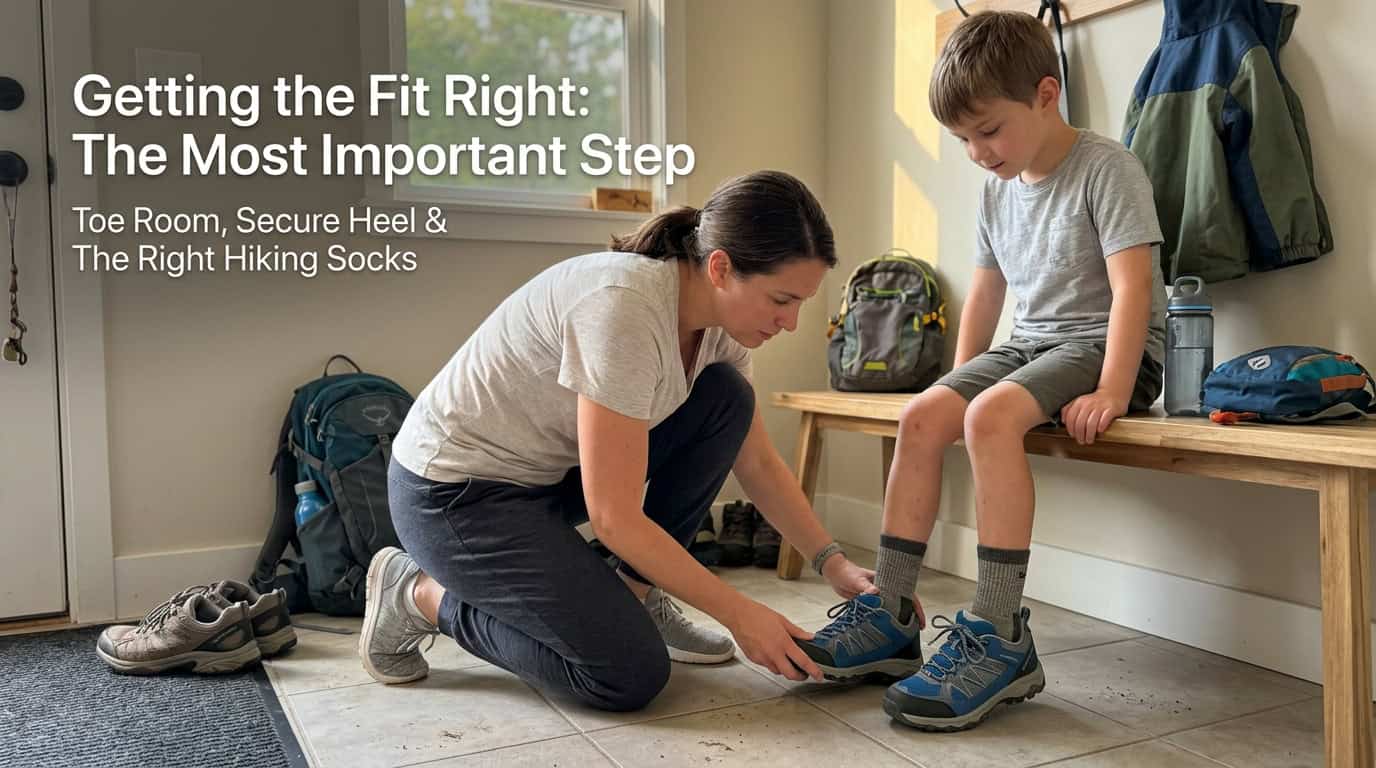
No hiking shoe performs well in the wrong size. For kids specifically:
- Thumb’s width between the longest toe and the shoe end. Kids’ feet swell on the trail, and downhill terrain pushes the foot forward into the toe box — without that clearance, black toenails and blisters follow.
- Zero heel slippage. Have your child stand flat-footed with weight distributed and press their heel firmly back — there should be no slipping when they push forward.
- Wiggle room for toes. Especially important for wide-footed kids — a shoe with an adequate length but a narrow toe box will create blisters on the outside of the small toe within the first mile.
- Try with hiking socks. The sock you bring on the trail changes the fit. Don’t size in thin ankle socks and then hike in thick wool ones.
- Shop late in the day. Feet are naturally slightly larger in the afternoon — shoes fitted in the morning may feel tight by 3pm on a hike.
Waterproof vs. Non-Waterproof: The Real Tradeoff
Waterproof membranes keep water out — but they also reduce breathability, which means hot, sweaty feet in warm conditions. For summer hiking on dry trails, a breathable non-waterproof shoe often keeps feet more comfortable than a waterproof one. For spring hiking, wet trails, creek crossings, or rainy-season outings, waterproofing earns its place. The honest rule: if your child’s feet will definitely get wet, buy waterproof. If you’re hiking in heat and dry conditions, breathability matters more.
What Parents Should Know About Barefoot Shoes for Kids on Trails
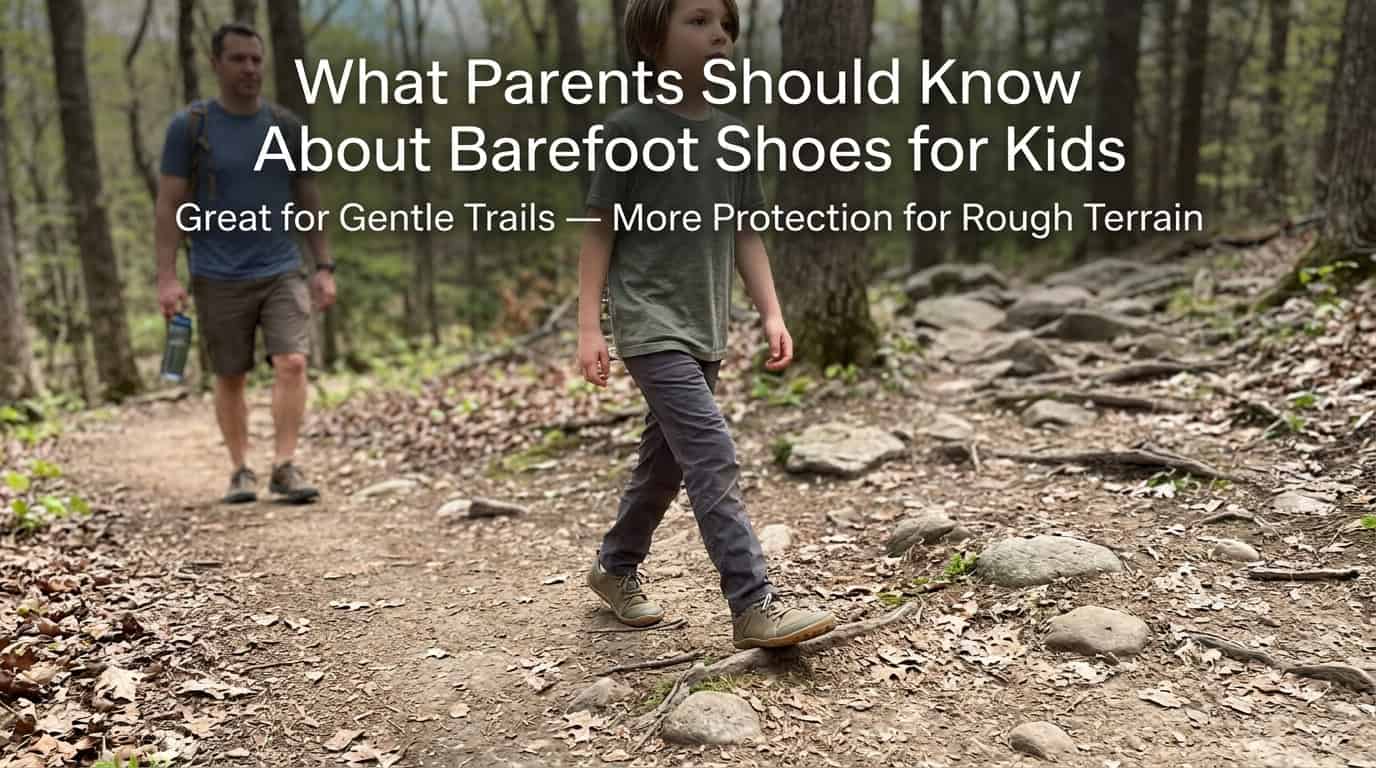
The barefoot shoe category — thin, flexible soles with wide toe boxes — is built around the philosophy that feet develop better with minimal interference and more ground feedback. For everyday wear and light trail use, many podiatrists and developmental specialists support this approach for children, whose feet are still forming. A wide toe box allows natural toe splay; a thin, flexible sole builds foot strength and proprioception.
The honest limitation for trail hiking: minimal soles offer minimal protection from sharp rocks, roots, and rough terrain. On groomed or gentle trails, barefoot hiking shoes work well and many kids prefer them. On technical, rocky, rooted, or steep terrain, a more protective sole is appropriate. If your child is new to barefoot footwear, transition gradually — feet and calves need time to adapt to reduced cushioning. Don’t take a barefoot-shoe novice on a rocky mountain trail on their first outing in the shoes.
Age and Terrain Quick Filter
| Hiker Profile | Best Shoe Type | Our Pick |
|---|---|---|
| Toddlers / Easy flat trails | Flexible low shoe, hook-and-loop | Merrell Trail Chaser |
| Young kids / Moderate day hikes | Low hiking shoe, waterproof, good traction | KEEN Targhee 4 Low |
| Older kids / Mixed terrain | Mid-height boot for ankle support | Merrell Chameleon 7 Mid |
| Active kids / Technical trails | Performance trail shoe with deep lugs | Salomon Speedcross J |
| Serious hiking families | Premium GTX waterproof boot | Lowa Maddox GTX LO |
| Wide feet / Natural development | Barefoot or wide-toe-box shoe | KUBUA Barefoot |
| Orthopedic / Arch support needs | Orthopedic hiking shoe | OrthoComfoot Kids |
| Budget / Occasional hikers | Budget waterproof boot | R CORD Hiking Boots |
Quick Picks: All 18 Shoes by Use Case
- Best Overall: KEEN Kids Targhee 4 Low
- Best for Young/First-Time Hikers: Merrell Trail Chaser
- Best Everyday-to-Trail Crossover: Merrell ML263182 Hiking Sneaker
- Best Mid-Height Boot (Ankle Support): Merrell Chameleon 7 Mid
- Best Merrell Versatile New Model: Merrell Copter Trek
- Best KEEN Waterproof Low: KEEN Kids Hightrail Waterproof
- Best Waterproof Mid Boot (Columbia): Columbia Peakfreak Rush Mid
- Best Trail Running Style: adidas Terrex Trailmaker 2
- Best Budget adidas Terrex: adidas Terrex Ax2r
- Best Technical Terrain / Advanced: Salomon Speedcross J
- Best Premium GTX Boot: Lowa Maddox GTX LO
- Best Scandinavian All-Weather Boot: Viking Track Mid Wp 2v
- Best Barefoot Hiking Shoe: KUBUA Kids Barefoot
- Best Wide Barefoot Option: LeIsfIt Kids Wide Barefoot
- Best Orthopedic / Arch Support: OrthoComfoot Kids Orthopedic
- Best Budget Boot: Mishansha Kids Hiking Boots
- Best Budget Waterproof Boot: R CORD Kids Hiking Boots
- Best Budget Waterproof Shoe: TARANIS Kids Hiking Shoes
Full Comparison Table
| Shoe | Height | Waterproof? | Best For | Price Tier |
|---|---|---|---|---|
| KEEN Targhee 4 Low | Low | Yes | Best overall / everyday trail | Mid-premium |
| Merrell Trail Chaser | Low | No | First-time young hikers | Mid |
| Merrell ML263182 | Low | No | Everyday crossover | Mid |
| Merrell Chameleon 7 Mid | Mid | Yes | Ankle support / older kids | Mid-premium |
| Merrell Copter Trek | Low | Check listing | Versatile active play + trail | Mid |
| KEEN Hightrail | Low | Yes | Waterproof wide toe box | Mid-premium |
| Columbia Peakfreak Rush Mid | Mid | Yes | Waterproof mid boot | Mid-premium |
| adidas Terrex Trailmaker 2 | Low | Check listing | Trail running style, speed | Mid |
| adidas Terrex Ax2r | Low | No | Budget adidas traction | Budget-mid |
| Salomon Speedcross J | Low | Yes | Technical terrain / advanced | Premium |
| Lowa Maddox GTX LO | Low | Yes (GTX) | Premium Gore-Tex waterproof | Premium |
| Viking Track Mid Wp | Mid | Yes | All-weather Scandinavian boot | Mid-premium |
| KUBUA Barefoot | Low | Check listing | Natural foot development | Mid |
| LeIsfIt Wide Barefoot | Low | No | Wide feet + barefoot | Budget-mid |
| OrthoComfoot | Low | Check listing | Arch support / orthopedic | Mid |
| Mishansha | Mid | Yes | Budget boot | Budget |
| R CORD | Mid | Yes | Budget waterproof boot | Budget |
| TARANIS | Low | Yes | Budget waterproof shoe | Budget |
Premium & Brand-Name Hiking Shoes
1. KEEN Kids Targhee 4 Low — Best Overall Kids Hiking Shoe

Verdict: The best starting point for most families — KEEN’s signature wide toe box gives growing feet room to move, the waterproofing handles wet trails reliably, and independent testing consistently ranks the Targhee 4 as the most comfortable kids hiking shoe available across age groups.
KEEN’s defining design philosophy is a wider, roomier toe box than most hiking shoe brands — and for children’s feet specifically, this matters more than it does for adults. Kids’ toes naturally splay when walking, and a tight toe box that restricts that movement creates the blisters and discomfort that end hikes early. The Targhee 4 Low is the iteration of KEEN’s long-running Targhee line most optimized for younger hikers, with waterproofing built in from the midsole up and a rubber outsole with enough lug depth to handle the transition from maintained trail to off-trail rooted terrain.

Key features for the trail:
- KEEN.DRY waterproofing: Keeps feet dry in puddles, creek crossings, and persistent light rain without requiring a separate waterproof sock or boot cover
- Wide toe box: KEEN’s trademark — significantly more room for toe splay than standard-width hiking shoes from competitors
- Metatomical footbed: KEEN’s arch support system is specifically contoured for the natural arch shape rather than a generic flat insert
- Rubber toe cap: Protects the most-likely-to-stub part of a young hiker’s foot on roots and rocks
- Non-marking rubber outsole: Works on indoor surfaces without leaving marks — doubles as a school and everyday shoe for many families

Pros:
- Best-in-class comfort consistently reported in real-world family testing
- Wide toe box prevents the most common cause of kids’ trail blisters
- Waterproofing reliable across a range of wet conditions
- Works as an everyday school shoe — strong cost-per-wear value
- KEEN brand has a genuine long-term reliability track record in family outdoor footwear
Cons:
- Wider profile may not suit narrow-footed children — the roominess that helps wide feet can feel sloppy on a narrow foot
- Less breathable than non-waterproof versions in warm conditions
- Mid-premium price point — more than budget options, less than Gore-Tex competitors
Best for: Most families with kids ages 4 and up going on regular day hikes across varied terrain. The first hiking shoe purchase that will actually get worn rather than sit in the closet.
Not for: Narrow-footed children who need a more fitted profile. Technical mountaineering terrain requiring a stiffer sole and higher ankle support.
How it compares: vs. KEEN Hightrail — both are waterproof KEEN shoes; the Targhee 4 is the established, more extensively tested model. vs. Merrell Trail Chaser — KEEN has better waterproofing; Merrell has an easier hook-and-loop closure for very young kids who struggle with laces.
Check Current Price on Amazon →
2. Merrell Trail Chaser — Best for Young and First-Time Hikers

Verdict: The easiest kids hiking shoe to get on and off independently — hook-and-loop closure, flexible sole, and a profile similar enough to a sneaker that reluctant young hikers won’t resist wearing it.
Getting a young child to wear an unfamiliar piece of gear on a trail is its own challenge, and the Trail Chaser’s sneaker-like appearance removes one common objection. Merrell designed this shoe for kids who are just starting to hike — the elastic lace system means a child can put it on and take it off independently, which matters when you’re managing multiple kids at the trailhead. The suede and mesh upper and EVA footbed keep it comfortable for the duration of a shorter family hike without the stiffness of a boot that needs breaking in.

Key features for the trail:
- Hook-and-loop elastic closure: Kids can manage it independently — on at the car, off at the door, without parent involvement every time
- Flexible EVA midsole: Bends naturally with a young child’s gait rather than fighting their foot mechanics
- Non-marking rubber outsole: Adequate traction for maintained trails and moderate terrain
- Machine washable: A genuine practical advantage for a kids shoe that will encounter mud, puddles, and general outdoor chaos
Pros:
- Hook-and-loop closure promotes independence — kids can manage it themselves
- Machine washable — practical for parents managing frequent muddy outings
- Sneaker-like profile reduces reluctance in kids who resist “hiking gear”
- Merrell brand reliability and consistent sizing
Cons:
- Not waterproof — wet conditions will soak through the mesh upper relatively quickly
- Traction is adequate for gentle maintained trails but not deep lug performance for rocky or rooted terrain
- Not the right shoe for serious hiking families doing technical terrain
Best for: Kids ages 2 to 7 on easy to moderate maintained trails. First hiking shoes for young children who need something comfortable and familiar. Families who want machine-washable footwear for younger kids who find many ways to get shoes dirty.
Not for: Wet or muddy conditions without waterproofing. Technical or rocky terrain requiring deep-lug outsole grip.
Check Current Price on Amazon →
3. Merrell ML263182 Hiking Sneaker — Best Everyday-to-Trail Crossover
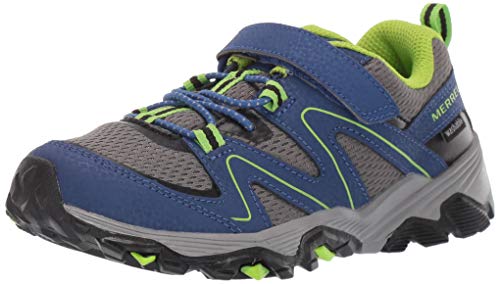
Verdict: Looks like a sneaker, performs like a trail shoe — the right choice for kids who resist wearing obvious hiking footwear but need better traction and support than a standard sneaker provides.
Some kids flatly refuse to wear anything that looks like hiking gear. This Merrell sneaker-style hiking shoe is the solution — designed to look like an athletic sneaker while incorporating Merrell’s trail-specific outsole compound and adequate support for light to moderate trail use. For families whose hiking happens casually, mixed into a day that might also include a playground or a restaurant, a shoe that doesn’t scream “outdoor gear” has practical appeal beyond just aesthetics.

Pros:
- Sneaker appearance reduces resistance from style-conscious kids
- Merrell trail outsole compound provides better grip than a standard athletic sneaker
- Transitions naturally from trail to everyday wear without looking out of place
- Consistent Merrell sizing makes repeat purchasing straightforward as feet grow
Cons:
- Not waterproof — mesh upper soaks through in wet conditions
- Less aggressive traction than dedicated hiking shoes — best for easy to moderate trails
- Not suitable for technical terrain or extended steep hiking
Best for: School-age kids who resist “outdoor gear” aesthetics. Families whose hiking is casual — nature walks, easy trails, days where hiking is one of several activities. Kids who will wear this shoe daily at school and on the trail equally.
Not for: Wet conditions, technical terrain, or families who need dedicated trail performance over everyday versatility.
Check Current Price on Amazon →
4. Merrell Chameleon 7 Mid — Best Mid-Height Boot for Older Kids
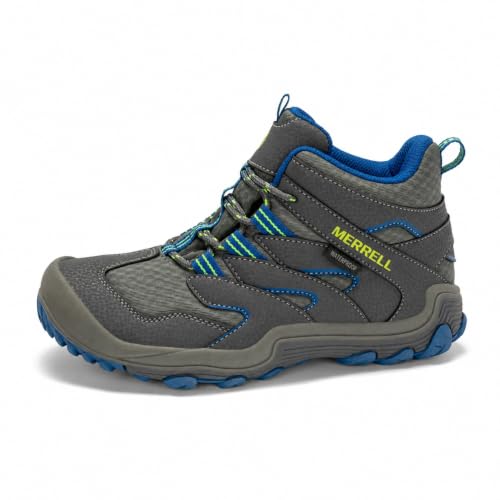
Verdict: The right choice for older kids on more demanding terrain — real ankle support, waterproofing, and a stiff-enough sole to handle rocky and rooted trails without turning every step into a balancing act.
Once a child is old enough to hike seriously — longer distances, more technical terrain, genuine elevation change — a low-cut hiking shoe starts leaving something to be desired in ankle stability on loose ground. The Chameleon 7 Mid addresses that with enough collar height to provide meaningful ankle support without the weight and stiffness of a full mountaineering boot. The waterproof membrane and Vibram-adjacent outsole make it the most capable shoe in Merrell’s kids lineup for demanding trail conditions.

Key features:
- Mid-height collar: Genuine ankle coverage without the bulk of a tall boot — provides support on lateral movement and loose gravel descents
- Waterproof membrane: Keeps feet dry on persistent wet trails and creek crossings
- Lace lock system: Secures the fit at multiple points up the ankle — important for keeping the boot properly positioned during technical terrain movement
- Aggressive outsole: More substantial lug pattern than the Trail Chaser or ML263182 — real grip on loose rock and wet root surfaces
Pros:
- Best ankle support of the Merrell kids lineup
- Waterproof for genuine wet-condition performance
- Appropriate for older kids doing real hiking rather than gentle nature walks
- Merrell brand reliability and durable construction
Cons:
- Heavier and stiffer than low-cut shoes — inappropriate for very young children whose gait benefits from flexible soles
- Lace system takes more time at the trailhead — not ideal for impatient young children
- Less versatile as an everyday shoe due to the boot height and weight
Best for: Kids ages 8+ doing moderate to challenging terrain, longer hikes, or trails with significant elevation change. Families who hike regularly and want footwear that grows with their child’s hiking capability rather than the entry-level options.
Not for: Young children whose feet and gait benefit from flexible soles. Easy, flat trails where ankle support is unnecessary.
Check Current Price on Amazon →
5. Merrell Copter Trek — Best Versatile New Merrell Model
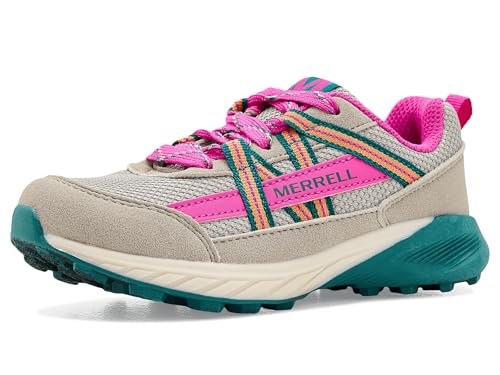
Verdict: Merrell’s newer entry in the kids lineup — combines trail performance with enough everyday versatility to serve as both a school shoe and a hiking shoe, with updated materials over older Merrell models.
The Copter Trek is Merrell’s more recent addition to their kids range, bringing updated materials and design to the versatile low-cut trail shoe category. Where the Trail Chaser is optimized for younger kids and the Chameleon 7 Mid for older kids on technical terrain, the Copter Trek sits in the middle — a capable everyday trail shoe with enough performance to handle moderate hiking and enough everyday appeal to justify daily wear outside the trail context.

Pros:
- Newer materials and construction over older Merrell kids models
- Versatile trail-plus-everyday design covers multiple use cases
- Merrell’s consistent outsole grip performance
- Good mid-range price positioning within the Merrell lineup
Cons:
- Newer model with a shorter track record than established Merrell kids shoes
- Waterproofing should be confirmed against the current listing — not all Copter Trek configurations include waterproofing
Best for: Families who want an updated Merrell option between the basic Trail Chaser and the more technical Chameleon 7. Kids who need one shoe that transitions between trail, school, and general outdoor use.
Check Current Price on Amazon →
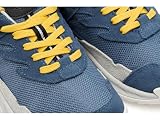
6. KEEN Kids Hightrail Waterproof — Best KEEN Waterproof Low Shoe
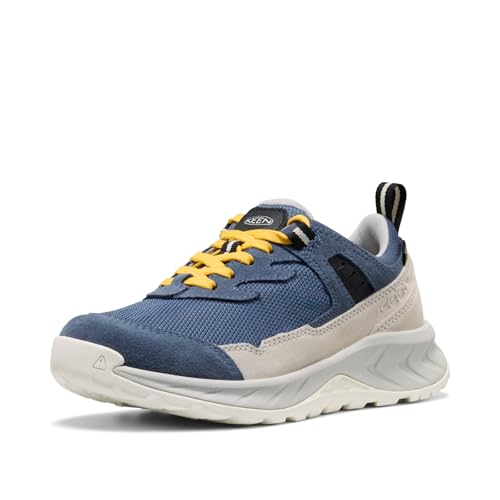
Verdict: KEEN’s waterproof low-cut hiking shoe with the wide toe box the brand is known for — a strong alternative to the Targhee 4 for families who prefer a slightly different KEEN silhouette or find the Targhee unavailable in their size range.
The Hightrail shares KEEN’s core design philosophy with the Targhee 4 — wide toe box, waterproof membrane, protective rubber bumper — in a different silhouette that some children find more comfortable or more visually appealing. Both are legitimate KEEN options for family hiking; the choice between them often comes down to fit preference once both are tried on the child’s foot.
Pros:
- KEEN’s wide toe box in a different shoe profile from the Targhee
- Waterproof membrane for wet trail confidence
- KEEN brand reliability and consistent sizing
- Protective rubber toe cap for rock and root contact
Cons:
- Less extensive real-world testing track record than the Targhee 4, which has been in families’ hands for longer
- Similar price point to Targhee — try both on if possible before choosing
Best for: Families who love KEEN but want a different silhouette than the Targhee. Kids whose feet fit KEEN’s profile but found the Targhee’s specific shape slightly off for their foot.
Check Current Price on Amazon →
7. Columbia Kids Peakfreak Rush Mid Waterproof — Best Waterproof Mid Boot
No products found.Verdict: Columbia’s kids waterproof mid boot — offers ankle support and reliable waterproofing from a trusted outdoor brand at a competitive price versus Merrell and KEEN mid-height options.
Columbia is one of the most consistently recommended outdoor brands for family hiking gear, and the Peakfreak Rush Mid brings their waterproofing and outsole engineering to a mid-height boot specifically sized for kids. The mid height provides the ankle support that makes descents on loose terrain more confident for older children, and Columbia’s Omni-Grip outsole compound has a strong reputation for wet-surface traction built through years of adult hiking footwear testing that carried over into their kids range.
No products found.Key features:
- Columbia Waterproof construction: Seam-sealed waterproof membrane keeps feet dry through sustained wet conditions
- Omni-Grip outsole: Columbia’s proprietary rubber compound specifically developed for multi-surface wet-terrain traction
- Mid-height collar: Ankle support for mixed terrain and descent stability
- Cushioned midsole: Impact absorption for long hiking days on rocky trails
Pros:
- Columbia brand reliability — established outdoor brand with real kids hiking footwear track record
- Omni-Grip outsole performs well on wet rock specifically
- Good price positioning vs. KEEN and Merrell mid boots
- Waterproofing reliable for spring hiking and wet trail conditions
Cons:
- Less breathable than low-cut non-waterproof options in warm weather
- Mid-height boot is heavier than low shoes — adds fatigue on very long hiking days
Best for: Families hiking in wet climates or shoulder seasons where waterproofing and ankle support both matter. Older kids who need more than a low shoe but aren’t ready for a full mountaineering boot.
Check Current Price on Amazon →
8. adidas Kids Terrex Trailmaker 2 — Best Trail Running Style Hiking Shoe
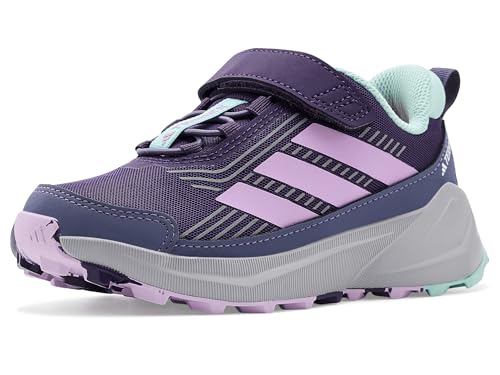
Verdict: Built for kids who hike fast — lightweight trail running construction with genuine outsole grip for the child who runs down every trail rather than walks it.
The Terrex Trailmaker 2 is adidas’s updated entry in their trail-specific kids lineup. The trail running heritage shows in the construction — lighter weight and more flexible than a traditional hiking boot, with Continental rubber outsole grip that the Terrex line carries from their adult performance shoes. For an active, fast-moving older child who treats trail hiking more like trail running, the lighter weight reduces fatigue without sacrificing meaningful traction performance.

Key features:
- Continental rubber outsole: adidas’s premium rubber compound — same technology used in adult performance trail running shoes, delivering reliable grip on varied surfaces
- Lightweight construction: Significantly lighter than traditional hiking boots — less energy expenditure per step over long distances
- Breathable upper: Mesh construction manages heat and moisture better than waterproof options in warm conditions
- Secure lacing system: Fits snug enough for running movement without the shoe shifting on the foot
Pros:
- Continental rubber outsole is one of the best grip technologies available in kids trail footwear
- Lightweight — less fatigue on long hiking days for active older kids
- adidas brand reliability and consistent sizing
- Works as everyday athletic shoes as well as trail footwear
Cons:
- Waterproofing — confirm on current listing; the base Trailmaker 2 may not be waterproof in all configurations
- Less ankle support than mid-height boots — not ideal for technical steep terrain
- Lighter construction means less rock protection on very rough trails
Best for: Active kids ages 7+ who hike quickly on moderate terrain. Trail running families who want a kids shoe that matches their athletic pace. Warm-weather hiking where breathability matters more than waterproofing.
Check Current Price on Amazon →
9. adidas Kids Terrex Ax2r — Best Budget adidas Terrex Option
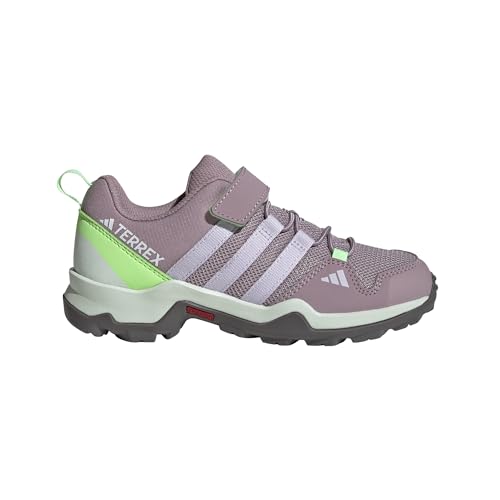
Verdict: Entry-level adidas Terrex traction at a lower price than the Trailmaker 2 — the right choice for families who want the adidas Terrex brand and outsole engineering without the premium model price.
The Ax2r is adidas’s more accessible kids trail shoe — less premium construction than the Trailmaker 2 but the same brand engineering philosophy applied at a lower price point. For occasional trail families who want a recognizable brand and real trail grip without paying for features their hiking frequency doesn’t justify, the Ax2r covers the basics competently.

Pros:
- adidas Terrex traction engineering at a lower price than the Trailmaker 2
- Recognizable brand that older kids may prefer aesthetically
- Good everyday versatility — works as athletic shoes beyond the trail
Cons:
- Not waterproof — not suitable for wet conditions
- Less aggressive lug pattern than the Trailmaker 2 or Salomon — moderate terrain is the appropriate use range
Best for: Budget-conscious families who want a brand-name trail shoe for dry, moderate terrain hiking. Families where the aesthetic preference for an adidas shoe matters to their child.
Check Current Price on Amazon →
10. Salomon Kids Speedcross J — Best for Technical Terrain
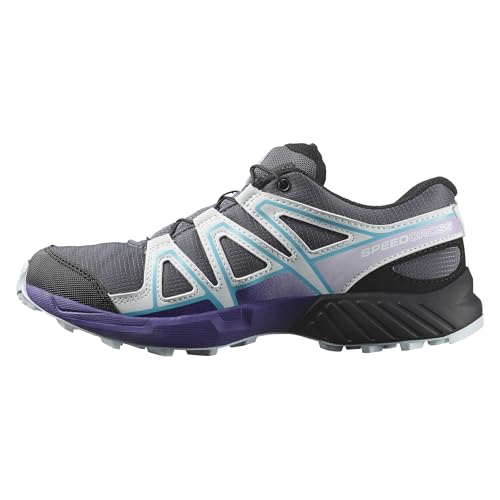
Verdict: The most capable traction shoe on this list for a child who hikes on genuinely challenging terrain — deep lugs, quick-lace system, and Salomon’s trail running engineering applied to a kids platform.
The Speedcross J brings Salomon’s adult Speedcross trail running DNA to a kids shoe. For families who hike seriously — real elevation, mixed terrain, technical rooted and rocky trails — Salomon’s grip engineering is genuinely superior to the trail grip on budget and mid-range options. The deep, aggressive lug pattern sheds mud efficiently and bites into loose gravel and rooted surfaces with more reliability than shallower outsoles. Family hiking teams that regularly test their kids on demanding trails will notice the difference on descent.

Key features:
- Chevron deep-lug outsole: Salomon’s aggressive lug pattern — one of the deepest and most self-cleaning in the kids trail shoe category
- Quicklace system: Single-pull lacing with a lace pocket means fast, secure lacing even in cold hands or gloves
- Protective mudguard: Wrap-around rubber protection for the most-contacted areas on technical terrain
- Waterproof option available: Confirm current listing for waterproof vs. non-waterproof configuration

Pros:
- Best grip performance of any shoe on this list for technical terrain
- Quicklace system is genuinely fast and secure — better than standard laces for trail use
- Salomon brand has decades of trail running and hiking footwear credibility
- Durable enough to last through multiple seasons of serious hiking
Cons:
- Premium price — reflects genuine performance engineering, not brand premium alone
- Aggressive lug pattern is overkill for easy maintained trails — you’re paying for capability you won’t use on gentle terrain
- Less casual as an everyday shoe than Merrell or KEEN options
Best for: Kids ages 6+ who hike on genuinely technical terrain — rooted and rocky trails, significant elevation change, loose gravel descents. Families who hike frequently and want a shoe that keeps pace with their trail ambitions.
Not for: Easy maintained trails where a standard traction shoe works equally well. Families who want a hiking shoe that doubles as a casual everyday sneaker.
Check Current Price on Amazon →
11. Lowa Kid Maddox GTX LO — Best Premium Gore-Tex Boot
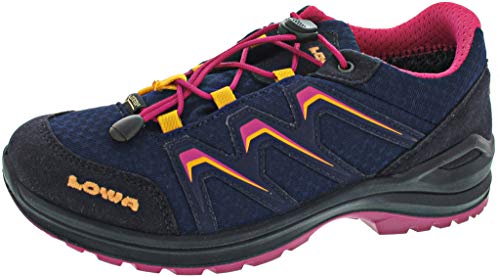
Verdict: The most premium waterproofing option on this list — Gore-Tex membrane means genuine, long-lasting waterproofing rather than a proprietary treatment that degrades over time. For serious hiking families who won’t settle for approximate waterproofing, this is the standard.
Gore-Tex is a third-party waterproofing membrane with independently tested and certified waterproofing standards — not a brand’s proprietary “waterproof” label, which can mean anything from “water resistant” to genuinely sealed. The Lowa Maddox GTX LO’s Gore-Tex membrane is certified to prevent water penetration under sustained immersion, which is meaningfully different from the waterproofing claims on budget and mid-range options. For families hiking in consistently wet climates, doing extended alpine hiking with kids, or needing genuine reliability in the worst weather, the GTX certification matters.

Key features:
- Gore-Tex membrane: Third-party certified waterproofing — not a proprietary treatment, not marketing language. Genuine sustained waterproof performance.
- Lowa construction quality: European trail boot engineering with genuine quality control over materials and assembly
- Stable platform: Lower center of gravity than taller boots while maintaining the stability benefits of a structured sole
- Durable upper materials: Built to outlast budget alternatives significantly — relevant for families who will pass shoes to younger siblings
Pros:
- Gore-Tex certification is the gold standard for kids waterproof hiking footwear
- Lowa build quality outlasts budget and mid-range alternatives
- Excellent for families who will pass the shoe to a second child — durable enough to survive two pairs of feet
- European trail boot engineering brings genuine performance for serious trail use
Cons:
- Premium price — the most expensive option in the non-budget section
- Less widely available in US sizing than Merrell and KEEN
- Confirm sizing carefully — European sizing standards differ from US standards
Best for: Families who hike seriously and frequently, in wet or alpine conditions, and want the best waterproofing available. Parents who plan to pass the shoe to a second child and need durability that justifies the premium cost per child.
Not for: Occasional hikers on easy terrain — the Gore-Tex premium isn’t justified for light use. Families who need a shoe in standard US sizing without conversion.
Check Current Price on Amazon →
12. Viking Track Mid Wp 2v — Best Scandinavian All-Weather Boot
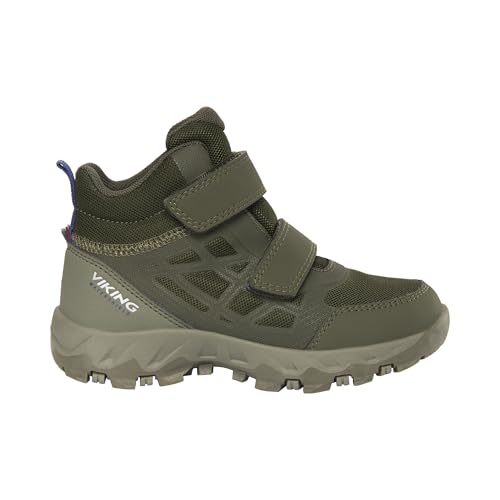
Verdict: Scandinavian outdoor engineering applied to a kids mid-height waterproof boot — Viking’s long heritage in all-weather outdoor footwear shows in a construction that handles genuinely cold, wet conditions better than most options built primarily for summer hiking.
Viking is a Norwegian outdoor footwear brand with a specific design focus on cold and wet conditions — the kind of trail conditions that northern European families deal with routinely and that North American families encounter in spring, fall, and in mountainous regions. The Track Mid Wp 2v brings that wet-weather-specific engineering to a kids boot, with a construction philosophy that prioritizes waterproof reliability and warmth in conditions where summer hiking shoes fall short.

Pros:
- Scandinavian engineering specifically optimized for cold and wet conditions — not a summer hiking shoe stretched to claim all-weather capability
- Mid-height construction provides ankle support for mixed terrain
- Viking brand has genuine heritage in outdoor footwear for challenging conditions
- Built for durability in conditions that wear out budget boots quickly
Cons:
- Less widely known in US market — fewer US parent reviews versus Merrell or KEEN
- May be warmer than necessary for pure summer hiking in hot climates
- Confirm US sizing availability before ordering
Best for: Families in northern climates, mountainous regions with unpredictable weather, or those who hike primarily in spring and fall rather than summer. Parents who’ve had consistently disappointing waterproofing from budget and mid-range options.
Check Current Price on Amazon →
Barefoot and Orthopedic Hiking Shoes
13. KUBUA Kids Barefoot Hiking Shoes — Best Barefoot Hiking Shoe

Verdict: A genuine barefoot hiking shoe — wide toe box, thin flexible sole, zero drop from heel to toe — for families who specifically want to support natural foot development rather than conventional cushioned support.
KUBUA’s barefoot hiking shoe is built on the core barefoot philosophy: the foot develops best with minimal interference, natural toe splay, and sensory feedback from the ground. The wide toe box allows the toes to spread naturally with each step rather than being compressed into a conventional shoe shape. The flexible sole moves with the foot rather than controlling it, and the zero-drop design means the heel and forefoot are at the same height — closer to barefoot walking mechanics than elevated-heel conventional shoes.

Key features:
- Zero-drop sole: Heel and toe at the same height — mimics natural barefoot walking mechanics
- Wide toe box: Allows natural toe splay without the compression that causes bunions and toe deformity over time
- Thin, flexible sole: Ground feedback and natural foot movement rather than rigid cushioning control
- Lightweight: Reduces the energy cost of carrying foot weight over distance
Transition warning: If your child is transitioning from conventional cushioned shoes to barefoot footwear, do it gradually. The foot muscles and calves need time to adapt to the different loading pattern. Start with shorter, easier hikes and build duration over several weeks.
Pros:
- Supports natural foot development — particularly relevant for growing children
- Wide toe box prevents toe compression that contributes to foot problems long-term
- Lightweight — less fatigue on long hikes
- Encourages foot strength and natural gait mechanics
Cons:
- Thin sole provides minimal rock protection on technical, rocky terrain
- Not appropriate for technical hiking without gradual transition from conventional footwear
- Requires foot strength adaptation period — not a “same day switch” from conventional shoes
Best for: Families committed to barefoot philosophy for their children’s foot development. Easy to moderate trail hiking with gradual terrain. Kids who have been wearing barefoot shoes in everyday life and are transitioning that footwear to trail use.
Not for: Rocky technical terrain. First-time barefoot shoe users on demanding trails. Kids who have existing foot conditions that require arch support — consult a podiatrist before transitioning to barefoot footwear.
Check Current Price on Amazon →
14. LeIsfIt Kids Wide Barefoot Hiking Sneakers — Best for Wide Feet + Barefoot Philosophy
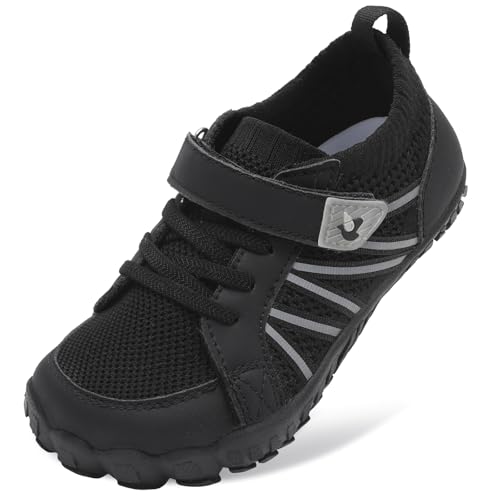
Verdict: Specifically addresses the wide-footed child who also wants barefoot-philosophy footwear — a genuine combination that most shoe brands don’t cater to, covering both the wide-fit need and the natural-foot-development philosophy in one shoe.
Wide-footed children face a specific problem in hiking footwear: most brands offer one width, and if that width is too narrow, no amount of correct length sizing solves the blistering on the sides of the toes and the compression that makes long hikes miserable. The LeIsfIt specifically addresses wide feet with a toe box wide enough to accommodate broader foot profiles while maintaining the flexible sole and natural-movement philosophy of barefoot footwear.

Pros:
- Wide fit accommodates foot profiles that standard hiking shoes compress uncomfortably
- Barefoot philosophy sole for natural foot movement
- Breathable construction for warm-weather hiking
- Anti-slip outsole for basic trail traction
Cons:
- Not waterproof — wet conditions are not this shoe’s environment
- Same barefoot transition caution applies as with KUBUA — gradual introduction required
- Best for easy to moderate trails — not technical terrain
Best for: Wide-footed children for whom standard hiking shoes cause toe box discomfort. Families using barefoot footwear philosophy who want a trail-appropriate version. Warm-weather, dry-condition hiking on easy to moderate terrain.
Check Current Price on Amazon →
15. OrthoComfoot Kids Orthopedic Shoes — Best for Arch Support and Orthopedic Needs
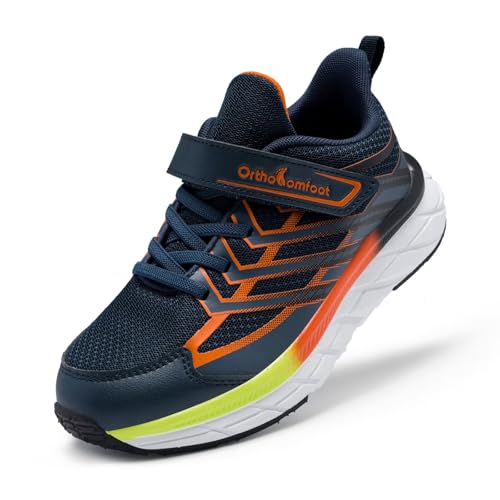
Verdict: Specifically built for children who need structured arch support — flat-footed kids, children with mild pronation, or those whose pediatrician or podiatrist has recommended supportive footwear for trail activity.
Most hiking shoes offer minimal or generic arch support — adequate for children with typical foot mechanics but insufficient for flat-footed children or those with pronation issues who put unusual stress on their feet and ankles during trail activity. The OrthoComfoot is specifically designed around orthopedic support principles, with a structured insole that supports the arch through the range of motion that hiking terrain demands.

Important note: If your child has been diagnosed with a specific foot condition or is using custom orthotics, consult your podiatrist or orthopedic specialist before choosing any off-the-shelf supportive footwear for trail use. This shoe is appropriate for mild support needs — it is not a medical device.
Pros:
- Structured arch support addresses flat-footed children’s specific needs
- Reduces the foot fatigue and ankle stress that unstructured shoes cause in children with mild flat feet or pronation
- Covered for both boys and girls in the same model
Cons:
- May not accommodate custom orthotics — confirm insole removability before ordering if your child uses prescribed inserts
- Not a medical-grade orthopedic device — for diagnosed conditions, consult a specialist
- Trail traction and waterproofing should be confirmed against the current listing for hiking-specific use
Best for: Children with mild flat feet, mild pronation, or whose feet fatigue significantly faster than expected on hikes of moderate length. Parents whose pediatrician has suggested supportive footwear for active outdoor use.
Check Current Price on Amazon →
Budget Kids Hiking Boots
The following three options deliver adequate waterproofing and trail traction at a price that makes more sense when you’re buying for feet that will grow out of the shoe in six to twelve months. None of them match the performance, durability, or brand reliability of the premium options above — but for occasional hikers and families doing easy terrain, they cover the functional need honestly.
16. Mishansha Kids Hiking Boots — Best Budget Boot

Verdict: A solid entry-level hiking boot for occasional family hikes — covers the basics of ankle support, basic waterproofing, and trail traction at a price that makes sense for children who hike a few times a year rather than regularly.
The Mishansha is the budget option for families who need a hiking boot that does the minimum required jobs — keeps water out for a reasonable amount of time, provides basic ankle support, and doesn’t slip on typical trail surfaces — without the investment that regular hiking families are more likely to justify. For a family that hikes a few times per summer on easy trails, the performance gap between the Mishansha and a premium boot is rarely noticeable in practice.

Pros:
- Budget pricing appropriate for feet growing rapidly
- Mid-height for basic ankle support on uneven terrain
- Basic waterproofing for light wet conditions
- Widely available in a full range of kids sizes
Cons:
- Waterproofing degrades faster than premium membrane options — not reliable for sustained immersion
- Build quality reflects the price — not built for heavy daily use or multi-season durability
- Outsole traction adequate for easy trails but not for technical or steep terrain
Best for: Occasional hiking families doing easy to moderate maintained trails. Growing children who will outgrow the boot in one season regardless of quality. First-time hiking boot purchases before committing to a premium pair.
Check Current Price on Amazon →
17. R CORD Kids Hiking Boots — Best Budget Waterproof Boot
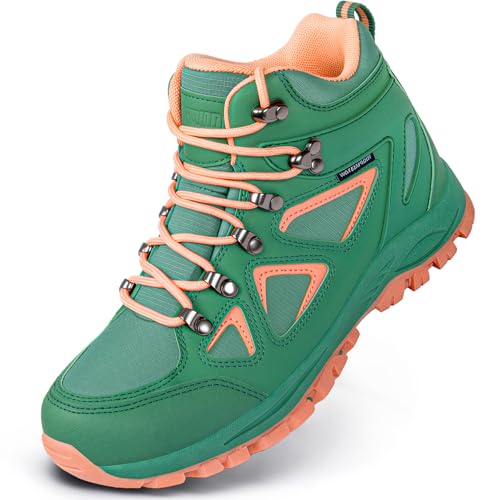
Verdict: Independent testing has specifically called out the R CORD for delivering genuine waterproofing at a budget price — the best value waterproof boot on this list for families where the main priority is keeping feet dry without the premium brand cost.
The R CORD stands out in the budget category specifically for waterproofing performance — independent testing (stuckathomemom.com’s 2026 review) noted that it delivers real waterproofing at a price point where most competitors’ “waterproof” claims are aspirational rather than functional. For a parent whose main concern is wet feet and whose hiking is primarily on easy to moderate trails, the R CORD addresses that specific need without requiring a premium investment.

Pros:
- Genuine waterproofing at a budget price — independently verified in 2026 testing
- Mid-height for ankle coverage and basic support
- Versatile enough for playground and light trail use — transitions between settings
- Strong value per dollar among budget waterproof options
Cons:
- Build quality is budget-appropriate — durability will not match premium brands for multi-season use
- Traction adequate for easy trails, not for technical terrain
- Some users have noted metal hardware rusting with significant moisture exposure — expected at this price tier
Best for: Families who specifically need waterproofing and are cost-constrained. Children who hike occasionally on easy wet trails. Growing children who will need a new pair next season regardless — the cost doesn’t need to match long-term durability.
Check Current Price on Amazon →
18. TARANIS Kids Hiking Shoes — Best Budget Low-Height Waterproof
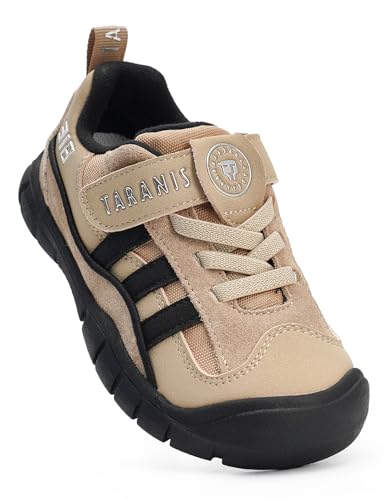
Verdict: A lightweight budget option for families who want waterproofing and trail traction in a low-cut shoe rather than a boot — covers the basics without the weight and stiffness of mid-height budget boots.
TARANIS offers a low-height alternative in the budget waterproof category — lighter than the R CORD or Mishansha boots, more flexible, and closer to a sneaker silhouette while still providing waterproofing and basic trail grip. For younger children who don’t need or tolerate ankle-height boots well, or for families doing easy flat trails where the ankle support of a boot is unnecessary, the lower profile is a practical advantage at this price point.

Pros:
- Lightweight and flexible — more comfortable for younger children than mid-height boots
- Waterproof membrane for basic wet-condition protection
- Budget pricing appropriate for rapid-growth seasons
- Anti-slip outsole for basic trail traction
Cons:
- No ankle support — a consideration for uneven terrain where a low shoe leaves the ankle unsupported
- Budget build quality — not built for heavy use or multi-season durability
- Waterproofing quality should be confirmed against the current listing — budget membrane treatments vary significantly in durability
Best for: Younger children on easy trails who find mid-height boots uncomfortable or restrictive. Budget-first families who want a lightweight waterproof option rather than a boot. Occasional hikers who need basic rain protection without premium pricing.
Check Current Price on Amazon →
The Cost-Per-Wear Argument for Premium Hiking Shoes
A $90–$130 KEEN or Merrell hiking shoe worn daily as a school shoe plus trail shoe for an entire academic year works out to roughly $0.25–$0.35 per wear over 260+ days of use. The same shoe serves multiple hiking trips per season. If you then pass it to a younger sibling, the cost-per-wear drops further. The math for a premium hiking shoe that doubles as a daily shoe is genuinely better than the math for a budget hiking-only shoe that sits in the closet between hikes.
Who Should Skip Dedicated Hiking Shoes
- Families who hike once or twice a year on easy maintained trails. A well-fitting sneaker with decent tread will serve you adequately. The budget options above cover wet-condition needs if that’s the specific gap.
- Very young children (under 2) whose feet change size rapidly. The investment is difficult to justify in a shoe that may be outgrown in two months. Easy terrain, any comfortable shoe with grip.
- Children whose last “hiking shoe” purchase sat unused in the closet. Build the hiking habit before building the gear collection. A pair of athletic sneakers for a few hikes will tell you if dedicated footwear is worth the investment for your family’s actual habits.
Frequently Asked Questions
Do kids need special hiking shoes or can they wear regular sneakers?
For easy, flat, maintained trails in dry conditions, a well-fitting athletic sneaker with decent tread is adequate. Dedicated hiking shoes earn their cost for wet conditions, rocky or rooted terrain, multi-hour hikes, or children with wide feet or orthopedic needs. The terrain and conditions you actually hike in determine whether the investment makes sense.
What age do kids need hiking boots with ankle support?
There’s no fixed age — it depends on the terrain. For easy maintained trails, a low-cut hiking shoe is appropriate at any age. For rocky, rooted, or steep terrain where loose ground creates lateral ankle stress, mid-height boots start providing meaningful support from around age 6-7, once a child’s hiking is demanding enough for the ankle support to matter.
What are the best kids hiking shoes for wide feet?
KEEN’s Targhee 4 and Hightrail both feature KEEN’s signature wide toe box — the most consistently recommended wide-fit option in kids hiking footwear. For families specifically committed to barefoot or minimal footwear philosophy, the LeIsfIt Wide Barefoot option covers both the wide-fit and natural-movement requirements.
Are barefoot hiking shoes safe for kids on trails?
On easy to moderate terrain with a gradual transition from conventional footwear, yes. On rocky, rooted, or technical terrain, the thin sole provides minimal protection from underfoot hazards. Transition gradually — don’t take a first-time barefoot shoe wearer on a demanding trail on day one.
How long should kids hiking shoes last?
Premium brands (Merrell, KEEN, Salomon, Lowa) typically last one to two full seasons of regular hiking use, sometimes longer depending on use frequency. Budget options realistically last one season. Since children’s feet grow one to two sizes per year, a shoe that fits perfectly this spring may be outgrown before it wears out — factor this into how much you spend.
Quick Recap: Where to Buy
| Shoe | Best For | Check Price |
|---|---|---|
| KEEN Targhee 4 Low | Best Overall | View on Amazon |
| Merrell Trail Chaser | Best for Young/First-Time Hikers | View on Amazon |
| Merrell ML263182 | Best Everyday-to-Trail Crossover | View on Amazon |
| Merrell Chameleon 7 Mid | Best Mid-Height Boot | View on Amazon |
| Merrell Copter Trek | Best Versatile New Merrell | View on Amazon |
| KEEN Hightrail Waterproof | Best KEEN Waterproof Low | View on Amazon |
| Columbia Peakfreak Rush Mid | Best Waterproof Mid Boot | View on Amazon |
| adidas Terrex Trailmaker 2 | Best Trail Running Style | View on Amazon |
| adidas Terrex Ax2r | Best Budget adidas Terrex | View on Amazon |
| Salomon Speedcross J | Best Technical Terrain | View on Amazon |
| Lowa Maddox GTX LO | Best Premium Gore-Tex | View on Amazon |
| Viking Track Mid Wp 2v | Best All-Weather Boot | View on Amazon |
| KUBUA Barefoot | Best Barefoot Hiking | View on Amazon |
| LeIsfIt Wide Barefoot | Best Wide Feet + Barefoot | View on Amazon |
| OrthoComfoot Orthopedic | Best Arch Support / Orthopedic | View on Amazon |
| Mishansha Hiking Boots | Best Budget Boot | View on Amazon |
| R CORD Hiking Boots | Best Budget Waterproof Boot | View on Amazon |
| TARANIS Hiking Shoes | Best Budget Waterproof Low Shoe | View on Amazon |
The best hiking shoe for your child is the one they’ll actually wear without complaining — fitted correctly, appropriate for the terrain you hike, and comfortable enough that their feet aren’t the reason the day ends early. Get the fit right first. Match the shoe to your actual terrain second. Everything else is details.