
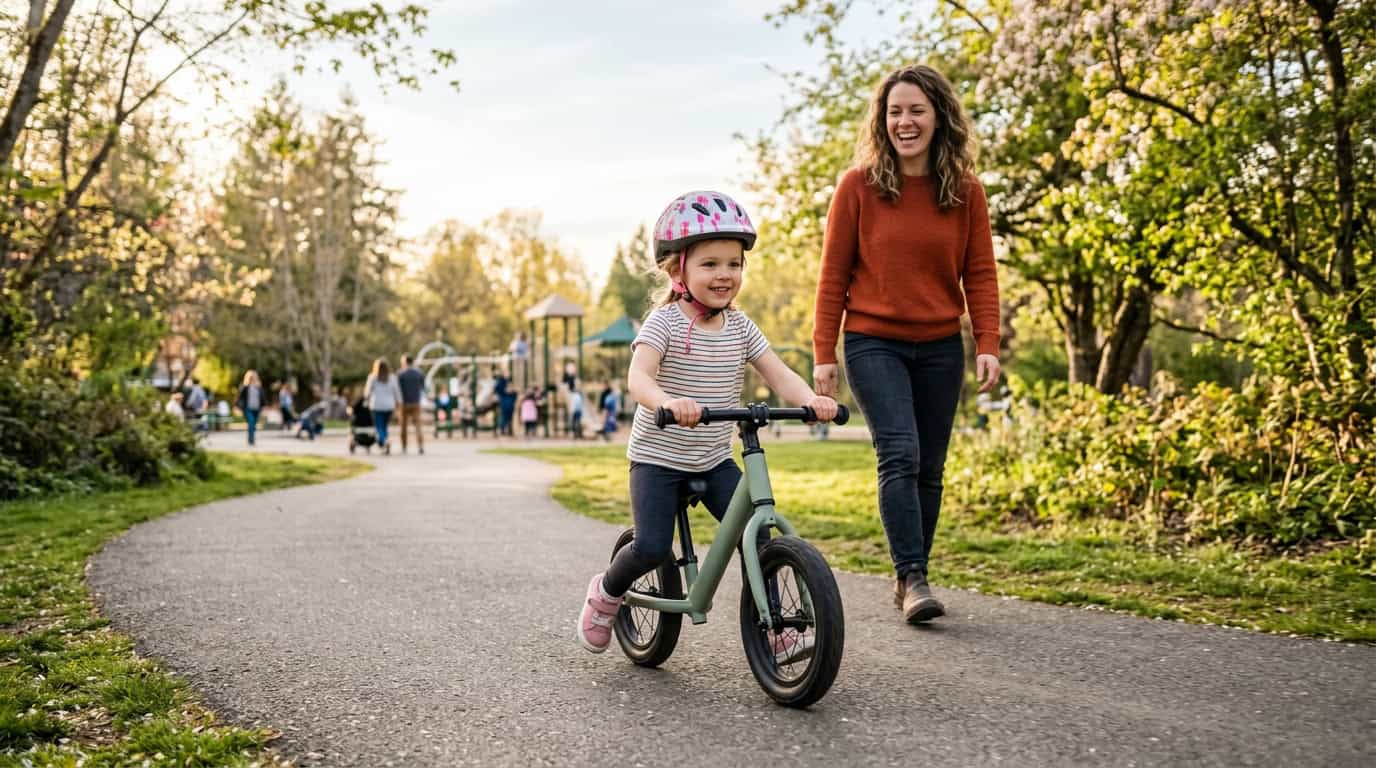
Once you’ve decided you’re not buying the cheapest bike on the shelf, the real question becomes: what does spending $100, $150, or $200+ actually get you? The honest answer is real engineering — lighter frames your kid can actually lift and control, components that don’t loosen after a month, and in several cases, resale value that brings your effective cost back down once your kid outgrows it. This guide breaks down six picks across the stages kids actually move through: first balance bike, first pedal bike, the convertible option that buys you time, and — with serious caveats you should read before clicking “buy” — a kids’ electric bike.
Get the Fit Right Before Anything Else
The single most common mistake in this category isn’t picking the wrong brand — it’s picking the wrong size. For a balance bike, the seat height should sit about an inch lower than your child’s actual inseam measurement, not their age or height alone. Measure your kid’s inseam (stand them against a wall, measure floor to crotch) before you buy anything, and check that number against each bike’s seat height range rather than trusting the age range printed on the box. A bike that’s too big undermines the entire point of a balance bike — your kid needs to comfortably get both feet flat on the ground.
Buy Once: The Resale Value Argument
Here’s the math nobody puts in a buying guide: a well-built balance bike or pedal bike from an established brand typically holds real resale value — kids outgrow bikes long before the bikes wear out, and the secondhand market for quality kids’ bikes is active. A $150 bike resold for $70–90 after a year or two has an effective cost lower than a $50 bike that loosens up, gets uncomfortable to ride, and ends up in the trash. If you’re choosing between “cheap and disposable” and “pricier but resellable,” the math often favors spending more upfront than it first appears.
Quick Picks by Stage
- Best Balance Bike for Bigger Kids: Strider 14x Classic — sized for kids 3 to 6, longer runway than a standard 12″ balance bike
- Best First Pedal Bike: woom GO 2 — purpose-built for the 3-to-4.5-year transition out of a balance bike
- Best Convertible (Grows With Your Child): RoyalBaby EZ Kids Bike 2-in-1 — spans balance and pedal modes across multiple sizes, ages 3 to 12
- Best Pedal Bike for Active Older Kids: RoyalBaby Freestyle-EZ — sturdier build for kids past the beginner stage
- Best Stylish First Pedal Bike: BANWOOD Classic Bike — a design-forward option that doesn’t sacrifice real components
- Kids’ Electric Bike — Read the Safety Section First: Kids Electric Bike, 350W/750W — capable of real road speeds; not a casual “next step” purchase
Comparison Table
| Bike | Type | Age Range | Best For |
|---|---|---|---|
| Strider 14x Classic | Balance bike | 3-6 years | Bigger/older first-time riders |
| woom GO 2 | Pedal bike | 3-4.5 years | First pedal bike after balance bike |
| RoyalBaby EZ 2-in-1 | Convertible (balance/pedal) | 3-12 years | One bike across multiple stages |
| RoyalBaby Freestyle-EZ | Pedal bike | Older kids/bigger frames | Active riders past beginner stage |
| BANWOOD Classic | Pedal bike | Preschool-age range | Style-conscious first pedal bike |
| Kids Electric Bike | Electric/motorized | Marketed 6+ — see safety notes | Not recommended at the marketed age range |
Balance Bike or Training Wheels? And When to Switch to Pedals
Balance bikes have largely replaced training wheels as the recommended starting point, and for good reason: training wheels teach pedaling before balance, while a balance bike teaches balance first — which is the actual skill that makes riding a real bike possible. A child who’s mastered a balance bike typically skips training wheels entirely.
You’ll know your child is ready to move from a balance bike to a pedal bike when they can glide with both feet up for 10+ seconds, steer and turn without putting feet down, and show genuine curiosity about pedaling. There’s no fixed age for this — some kids get there at 3, others closer to 5 or 6 — so let the skill signals guide the purchase rather than the calendar.
Balance Bikes
Strider 14x Classic — Best Balance Bike for Bigger Kids
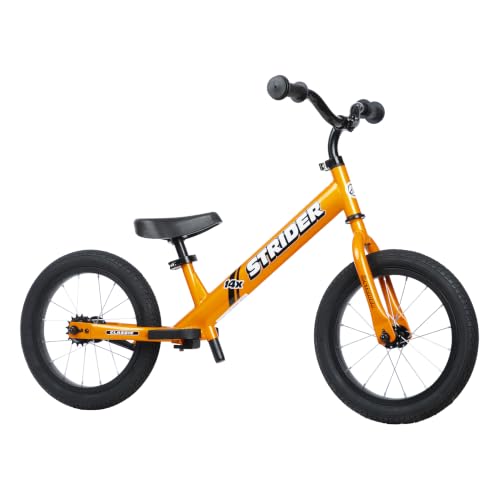
Strider built its reputation on the original 12″ balance bike, and the 14x extends that same design philosophy to a bigger frame for kids who’ve outgrown — or never quite fit — the standard 12″ size. For ages 3 to 6, this gives a taller, longer-legged kid real room to grow into rather than feeling cramped on a bike sized for a toddler.

Strider’s track record (millions of units sold globally) and simple, low-maintenance design make this a safe bet if you want a balance bike that holds up to real daily use rather than a few months of gentle driveway riding. Confirm the current seat height range against your child’s measured inseam before buying, rather than relying on the age range alone.
First Pedal Bikes
woom GO 2 — Best First Pedal Bike
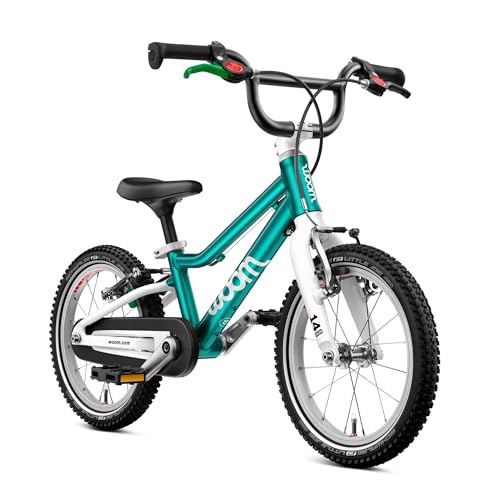
Woom built its name on lightweight, kid-specific engineering rather than scaled-down adult bikes, and the GO 2 reflects that — purpose-built for the exact window (roughly 3 to 4.5 years) when a kid is ready to move off a balance bike and onto pedals. A lighter frame at this stage matters enormously: a heavy pedal bike is genuinely harder for a small kid to control and stop confidently.

This sits at the premium end of the price range for a first pedal bike, and the cost buys real kid-specific component sizing (narrower grips, properly proportioned brake levers) rather than a generic small bike with adult-proportioned parts.

Like the premium balance bikes above, Woom bikes tend to hold resale value well given the brand’s reputation — worth factoring into the actual cost-over-time math.
BANWOOD Classic Bike — Best Stylish First Pedal Bike
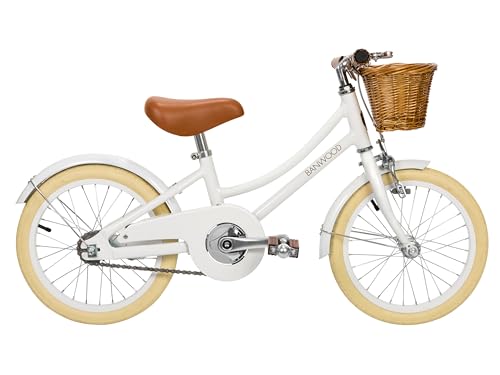
Banwood has built a niche around design-forward kids’ bikes that look like vintage cruisers rather than typical kids’ bikes — a genuine draw if you want something that looks good in family photos and doesn’t feel like a toy. That aesthetic focus doesn’t come at the expense of real components; this is a functional first pedal bike, not purely a style object.

This is best suited to the preschool-age range as a first or early pedal bike — check the specific size/age recommendation on the current listing against your child’s height before buying, since “classic” styling sometimes means a more limited size range than more utilitarian competitors.
Convertible & Bigger-Kid Pedal Bikes
RoyalBaby EZ Kids Bike 2-in-1 — Best Convertible (Grows With Your Child)
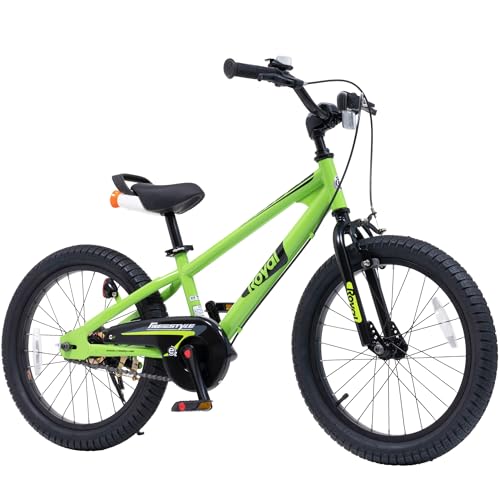
This is the buy-once option for parents who’d rather not purchase a new bike at every single stage. The 2-in-1 balance-to-pedal design, combined with size options spanning 12″ to 20″ wheels, means this single product line can realistically take a kid from early balance-bike riding through a real pedal bike for an older child — though you’ll likely still buy a specific size for your child’s current stage rather than one bike doing everything at once.

The training-wheel/balance conversion hardware adds a bit of bulk and weight compared to a dedicated single-purpose bike, which is the honest tradeoff for the flexibility — a kid who’s already a confident balance-bike graduate may prefer the lighter, simpler woom GO 2 above for the pedal stage specifically.

For families who want one trusted size-chart to reference across multiple kids or multiple growth stages, the breadth of sizing here is a genuine practical advantage.
RoyalBaby Freestyle-EZ — Best Pedal Bike for Active Older Kids
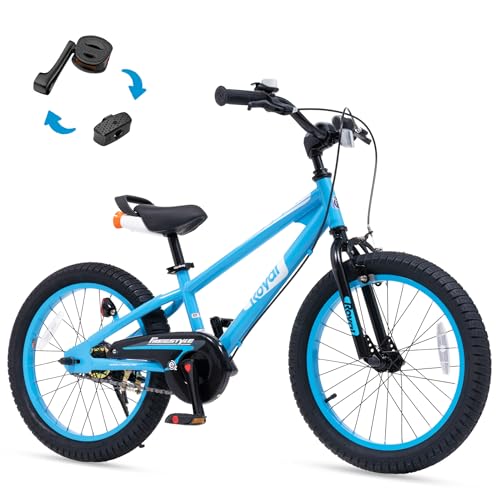
For a kid who’s past the beginner stage and riding with real confidence — pedaling fast, taking corners, riding on varied terrain beyond the driveway — this steps up in durability and build compared to an entry-level first pedal bike. It’s built for a kid who’s going to put real daily mileage on it, not just gentle test rides.

Confirm the specific wheel size and frame dimensions on the current listing against your child’s height and inseam — RoyalBaby offers this line across a range of sizes, and matching the right one matters as much here as it does at the balance-bike stage.
Kids’ Electric Bike: Read This Before You Buy
Kids Electric Bike, 350W/750W Motor — Important Safety Information
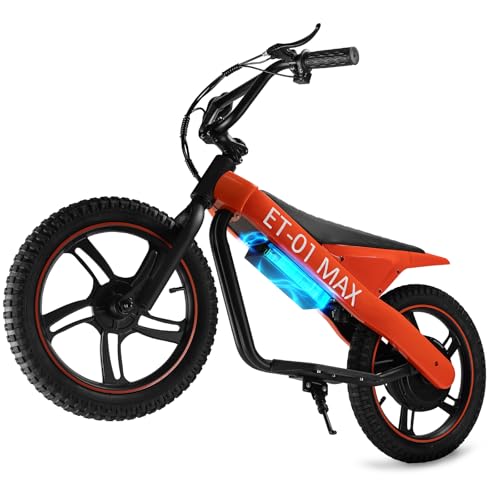
We’re including this because you sent it, but we want to be direct rather than just slap a warning label on a glowing review: this product is marketed for ages 6 and up, with a speed range of 10–19 MPH depending on mode. That marketed age range doesn’t line up with what child safety experts and the U.S. Consumer Product Safety Commission actually recommend. The CPSC has specifically advised that children under 12 should not operate any product capable of exceeding 10 MPH, and most child-safety and pediatric guidance places the realistic minimum age for any e-bike — even a lower-powered one — at 13 to 14, with many experts recommending 14–16 specifically for anything in this product’s speed and wattage range.

A 750W motor capable of nearly 19 MPH puts this at the upper edge of what’s legally classified as a Class 2 e-bike in most U.S. states — a category generally intended for teens and adults, not a 6-year-old. E-bike-related injuries among children have risen sharply in recent years according to CPSC data, and the most common contributing factors are exactly the ones you’d expect with a young or inexperienced rider: unfamiliarity with the controls, riding faster than the child can safely handle, and inconsistent helmet use.

If you do purchase this for an older child within the household (closer to 10-14, not the marketed minimum of 6), treat it the way you would a genuinely powerful piece of equipment, not a toy upgrade from a pedal bike: confirm and use any included speed-limiting or parental-lock settings and start your child at the lowest available speed mode, require a CPSC-certified helmet plus knee and elbow pads on every single ride with zero exceptions, supervise early rides directly rather than from a distance, check your specific state and local laws on e-bike age minimums and helmet requirements before allowing any use on a public road or path, and don’t allow use until your child has solid, confident experience on a standard pedal bike first. For a child at the lower end of the marketed age range, we’d recommend skipping this category entirely in favor of one of the pedal bikes above and revisiting an e-bike conversation years from now.
Who This Is NOT For
- Anyone hoping a $100+ bike will “fit forever.” Kids outgrow bikes by design — budget for at least one more purchase down the line, and lean on resale value to offset it rather than expecting a single bike to last from toddlerhood to adolescence.
- Parents considering the electric bike for a child anywhere near the marketed minimum age of 6. See the safety section above — this isn’t a judgment call we’d leave purely to marketing copy.
- Families who haven’t measured their child’s actual inseam. Don’t buy by age range alone — a bike that doesn’t fit defeats the purpose regardless of how good the bike itself is.
Frequently Asked Questions
Is a balance bike better than a bike with training wheels?
Most child development and cycling experts now recommend balance bikes over training wheels, since they teach balance — the core skill needed to ride independently — before introducing pedaling. Kids who learn on a balance bike typically transition directly to a pedal bike without ever needing training wheels.
How do I know when my child is ready to move from a balance bike to a pedal bike?
Look for these signs rather than relying on age alone: gliding with both feet up for 10+ seconds, turning and steering without putting feet down, and genuine interest in pedaling. Readiness varies widely by child, typically somewhere between ages 3 and 6.
What age is appropriate for a kids’ electric bike?
Most child-safety experts and pediatric health resources recommend a minimum age of 13-14 for any e-bike, even lower-powered models, with many recommending 14-16 specifically for bikes with higher wattage or speed capability. The CPSC advises against children under 12 using any product capable of exceeding 10 MPH. Always check your specific state and local laws, which vary and may set their own minimum ages and helmet requirements.
Do kids’ bikes hold resale value?
Bikes from established, well-reviewed brands generally hold resale value well, since kids typically outgrow a bike long before it wears out. This can meaningfully offset the higher upfront cost of a quality bike compared to a budget option that may need to be replaced rather than resold.
Quick Recap: Where to Buy Each Pick
| Bike | Best For | Check Price |
|---|---|---|
| Strider 14x Classic | Best Balance Bike for Bigger Kids | View on Amazon |
| woom GO 2 | Best First Pedal Bike | View on Amazon |
| RoyalBaby EZ 2-in-1 | Best Convertible Pick | View on Amazon |
| RoyalBaby Freestyle-EZ | Best for Active Older Kids | View on Amazon |
| BANWOOD Classic | Best Stylish First Pedal Bike | View on Amazon |
| Kids Electric Bike | Read Safety Section First | View on Amazon |
The right bike at every stage is the one sized correctly for the kid in front of you right now — not the one with the longest age range printed on the box. Measure first, match the bike to real skill signals rather than the calendar, and when it comes to anything with a motor and a throttle, let your child’s actual maturity and experience set the timeline, not the marketing.