

Let’s talk about breastfeeding and weight loss—because if you’re a new mom, you’ve probably heard it all. “Breastfeeding melts the baby weight!” “You can eat whatever you want and still lose pounds!” Sound familiar? But is it really that simple? Grab your coffee ☕, friend, and let’s break down what’s real, what’s wishful thinking, and how to care for your body while nourishing your baby.
breastfeeding weight loss
| Main Point | Quick Summary |
|---|---|
| Breastfeeding burns calories | Producing milk uses 400–700 extra calories a day |
| Weight loss results vary | Some lose weight, others don’t—every body is different |
| It’s not a magic fix | Diet, activity, sleep, and hormones all play a role |
| Extreme dieting is risky | Restrictive diets can harm milk supply and energy |
| Gradual, healthy loss is best | Aim for slow, steady progress—be patient with your body |
Busting the Biggest Breastfeeding and Weight Loss Myths
Myth 1: Breastfeeding Guarantees Fast Weight Loss
Let’s get this out of the way: not every mom loses weight just because she’s breastfeeding. Sure, your body uses more energy to make milk (hello, calorie burn!), but some moms find the scale barely budges—or even goes up. Why? Your body is smart. Sometimes it hangs onto fat stores to make sure you have enough energy for milk production, especially in those early months.
“I thought I’d drop weight fast since I was nursing twins, but my body clung to every pound until I started weaning. It was frustrating, but I tried to focus on fueling myself and my babies.” — Real Mom
Myth 2: You Can Eat Anything and Still Lose Weight
Breastfeeding makes you hungry. Like, “eat the whole pantry” hungry. But that doesn’t mean you can eat anything and expect weight to fall off. If you’re reaching for cookies and chips every time hunger strikes (no judgment—we’ve all been there!), you might actually gain weight or stay the same.
Reality check:
- Breastfeeding burns calories, but extra snacks can easily cancel that out.
- Choosing nourishing foods helps you feel satisfied and supports your recovery.
Myth 3: All the Weight Comes Off During Breastfeeding
Some moms lose most of their pregnancy weight while nursing. Others? Not so much. It’s totally normal for a little “mom pooch” or extra softness to stick around until after you stop breastfeeding—or even longer.
Myth 4: Breastfeeding Alone Determines Postpartum Weight
There’s so much more at play:
- Genetics: Some bodies just hold onto fat more than others.
- Activity: Are you able to move, walk, or do gentle exercise?
- Sleep: (Or lack of it!) Messes with hunger hormones and cravings.
- Stress: High cortisol can make losing weight harder.
The Science: How Breastfeeding Really Affects Weight
Breastfeeding positions
How Many Calories Does Breastfeeding Burn?
On average, making breast milk burns about 400–700 calories a day. That’s like doing an hour-long workout—without ever setting foot in a gym. But before you get too excited, remember:
- The exact number depends on how much you’re nursing (exclusive breastfeeding burns more).
- Your baby’s age matters—newborns eat more often than older babies.
- Your body may compensate by making you hungrier or slowing your metabolism.
Why Weight Loss Isn’t Guaranteed
Your body’s main job is to protect your milk supply. Sometimes that means holding onto fat, especially in the belly, hips, and thighs. Hormones like prolactin (which helps make milk) and estrogen (which drops after birth) can affect how your body stores and uses energy.
Other factors that influence weight loss while breastfeeding:
- Diet quality: Are you eating mostly whole foods, or lots of processed snacks?
- Hydration: Dehydration can slow metabolism and affect milk.
- Sleep deprivation: Raises cortisol, which can encourage fat storage.
- Genetics and pre-pregnancy weight: Everyone’s baseline is different.
What Research Really Shows About Breastfeeding and Postpartum Weight Loss
Let’s look at what studies have found (because science > rumors):
- Short-term: Moms who exclusively breastfeed might lose about 2–7 pounds more in the first 6–12 months than those who don’t. But that’s not a guarantee—it varies a lot.
- Long-term: Some research shows that breastfeeding moms have a lower BMI and less body fat years later, but not all studies agree. For many, the last few pounds stick around until after weaning.
- Individual differences: Genetics, how much weight you gained during pregnancy, and your daily habits all matter.
Research Findings Table
| Study/Source | Finding | Takeaway |
|---|---|---|
| Study A | Breastfeeding moms lost 2kg more in 6 months | Modest, not guaranteed |
| Study B | No significant difference after 1 year | Every body is different |
| Study C | Some retained weight until weaning | Patience is key |
Practical Tips for Healthy Weight Loss While Breastfeeding![breastfeeding weight loss]()

So, what can you do if you want to lose weight while breastfeeding—without hurting your milk supply or feeling miserable? Here’s what works for most moms:
1. Eat Enough—Don’t Slash Calories
Your body needs fuel to make milk and heal. Cutting calories too much can tank your energy and lower your milk supply.
- Focus on nutrient-dense foods:
- Lean proteins (chicken, eggs, tofu)
- Whole grains (oats, brown rice, quinoa)
- Fruits and veggies (especially leafy greens and berries)
- Healthy fats (avocado, nuts, olive oil)
- Smart snacks for busy moms:
- Greek yogurt with fruit
- Apple slices with peanut butter
- Hummus and veggie sticks
- Boiled eggs
2. Hydrate Like a Pro
Breastfeeding makes you thirsty. Aim for at least 8–10 cups of water a day (more if you’re sweating or it’s hot out). Signs you need more water: dark urine, headaches, or low milk output.
3. Move Gently, Move Often
You don’t need to hit the gym hard. Start with walks, gentle stretching, or core-safe exercises once your doctor gives the green light. Even 10 minutes a day helps!
4. Listen to Your Body
- Honor hunger cues: Eat when you’re hungry, but try to choose nourishing options.
- Don’t skip meals: Skipping meals can slow your metabolism and make you feel worse.
- Avoid fad diets: Intermittent fasting or keto isn’t recommended in the early postpartum months.
5. Be Patient—Slow and Steady Wins
Healthy weight loss while breastfeeding is usually about 1–2 pounds per month. Celebrate non-scale victories, like more energy, better mood, or feeling stronger.
When Breastfeeding and Weight Loss Don’t Go as Planned
If you’re feeling frustrated that the scale isn’t budging (or is even creeping up) while you’re breastfeeding, you’re not alone. Many moms expect the pounds to melt away, but the reality is often more complicated. Here’s why:
- Breastfeeding increases your calorie needs, but it also ramps up your appetite. Many moms find themselves snacking more, especially when sleep-deprived or stressed.
- Your body may hold onto some fat stores as a backup to ensure a steady milk supply—this is a normal, hormone-driven survival mechanism.
- Weight loss is gradual for most moms. Research shows that exclusively breastfeeding for 3–6 months may help you lose a bit more weight than formula feeding, but the difference is usually small—think a few pounds, not dozens.
- Other factors matter: Sleep deprivation, stress, eating habits, activity level, and even how much weight you gained during pregnancy all affect how quickly (or slowly) you lose weight after birth.
What the Research Says (No Sugarcoating)
| Factor | What Science Shows |
|---|---|
| Calorie Burn | Breastfeeding burns 400–700 extra calories daily, but hunger often increases to match this |
| Weight Loss Amount | Most studies show 1–3 kg (2–7 lbs) more lost in the first year if breastfeeding exclusively |
| Timing | Noticeable weight loss often starts 3–6 months postpartum, not right away |
| Every Body is Different | Some moms lose weight, some don’t, and a few even gain—there’s no universal rule |
When (and How) to Try Losing Weight While Breastfeeding![breastfeeding weight loss]()
Don’t Rush—Give Your Body Time
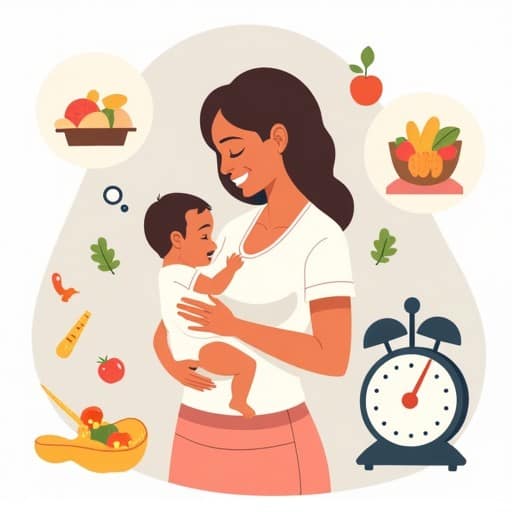
Experts agree: Wait at least two months before actively trying to lose weight. This gives your milk supply time to stabilize and your body time to heal. Trying to lose weight too soon—especially with strict dieting—can lower your milk supply and leave you feeling exhausted.
Aim for Gradual, Gentle Weight Loss
- Safe pace: About 1 pound (0.5 kg) per week, or 4–5 pounds per month, is safe for most breastfeeding moms.
- Avoid extreme diets: Cutting calories too much can affect your energy, mood, and milk supply.
- Focus on nutrition: Choose whole, nutrient-dense foods—lean proteins, whole grains, fruits, veggies, and healthy fats.
Move Your Body—But Start Slow
- Gentle exercise (like walking or stretching) can help boost your mood and support gradual weight loss once your doctor says it’s okay.
- Listen to your body: If you feel wiped out, rest. Healing comes first.
Hydration & Snack Smarts
- Drink plenty of water—breastfeeding is thirsty work, and staying hydrated helps with both milk supply and metabolism.
- Smart snacks: Try Greek yogurt, fruit, nuts, or veggie sticks instead of reaching for sugary or processed foods.
Common Mistakes That Can Stall Postpartum Weight Loss
- Skipping meals: This can backfire by slowing your metabolism and making you hungrier later.
- Relying on processed snacks: Quick energy fixes (like cookies or chips) can add up fast, especially if you’re snacking often.
- Comparing yourself to others: Every postpartum journey is unique—what works for your friend or a celebrity might not work for you.
- Ignoring self-care: Stress and lack of sleep can make weight loss harder, so prioritize rest and ask for help when you need it.
When to Ask for Help
If you’re feeling stuck, overwhelmed, or worried about your weight, milk supply, or mental health, reach out. It’s totally okay (and smart!) to ask for support from:
- Your doctor or midwife—for safe weight loss advice and a postpartum checkup.
- A lactation consultant—if you’re worried about milk supply or feeding.
- A registered dietitian—for help with meal planning and nutrition.
- A mental health professional—if you’re feeling anxious, sad, or just not yourself.
Real Talk: Embracing Your Postpartum Body
Remember, your body just did something amazing. It grew, birthed, and is now nourishing a whole new human. That’s huge! The “snap back” myth is just that—a myth. For many of us, the real change happens slowly, and that’s okay.
“I didn’t lose the last ten pounds until after I stopped breastfeeding, and honestly, it took me a year to feel like myself again. But I learned to appreciate my body for what it could do, not just what it looked like.” — Real Mom
Be gentle with yourself. Celebrate small wins—like feeling stronger, having more energy, or just making it through another day. The baby weight will come off in time, but this season with your little one is short and precious.
Bottom line: Breastfeeding and weight loss are linked, but not in the “magic fix” way you might have heard. Focus on nourishing yourself, moving gently, and giving yourself grace. You’re doing an amazing job, mama! 💛